

Sculpting with Intuition:
A Dialogue with Savvas Laz
Sculpting with Intuition:
A Dialogue with Savvas Laz
What is your starting point when designing a Trashformers piece? Do you already have an idea in your head or does intuition serve as your guide?
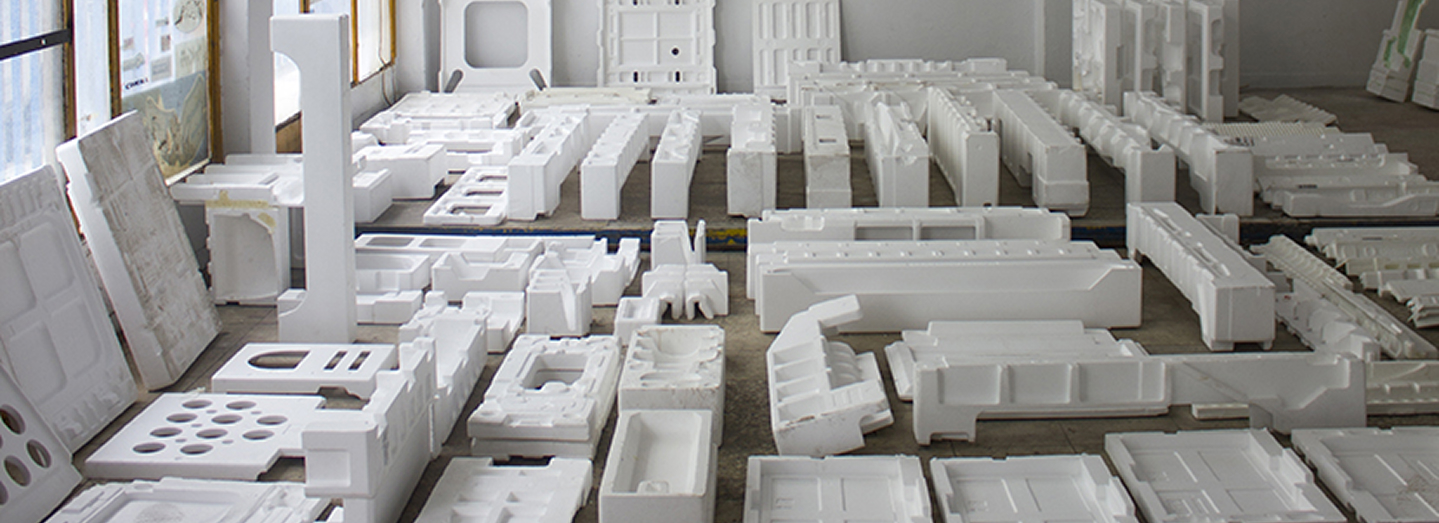
I usually have an idea in my head about what kind of object I want to create, but the final outcome is part of a creative process that relies heavily on intuition and even a degree of randomness. For instance, I might come across a piece of styrofoam that is suitable for a particular construction. The Trashformers are not just a series of objects, but rather a method that offers countless possibilities, uses, morphologies, and combinations. It is more akin to a complex game of sculpting with LEGOs that combines both design and intuition. The magic of sculpting for me lies in the fact that you have to trust the process and let the process guide you most of the time.
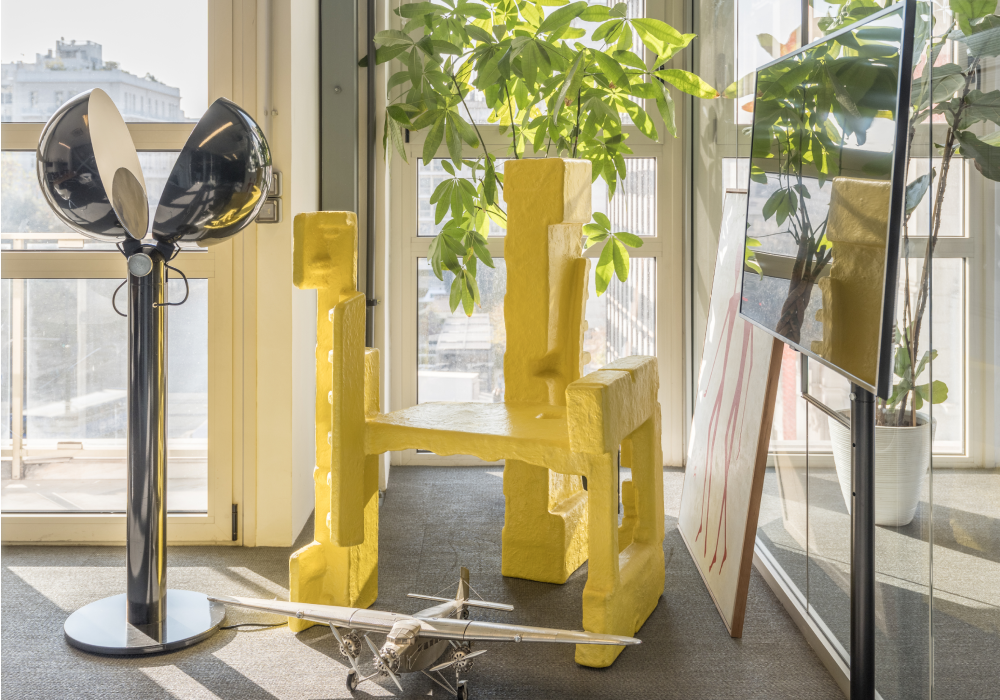
While you primarily work with salvaged styrofoam, an inexpensive material produced and discarded in abundance, the ostensible "value" of the material emerges through the act of repurposing. This intricate process relies on the skilled craftsmanship of local artisans and the labor-intensive effort of working the material. Could you elaborate on the significance and role of craftsmanship in your work?
Craftsmanship is the main reason I have chosen to pursue art as a career, and it is an integral part of my work. I am particularly fascinated by "what human hands can create." This interest is not limited to my work as a sculptor, but is also a part of my wider research and interest in the concept of craft. Alongside my artistic practice, I am invested in exploring, discovering, and collaborating with skilled artisans of other techniques and disciplines and initiating a larger dialogue on the subject of craftsmanship through my work. Both ancient and Modern Greece have a long and historical craft tradition and it is important that craftsmen with deep knowledge of their material and technique still exist.
The role of modern design is not only to preserve this tradition, but to take it a step further, to evolve craftsmanship so that it may remain alive and in dialogue with its time. Especially in times of rapid technological expansion, the concept of craftsmanship becomes even more crucial to my practice. It is the details of craftsmanship that lend uniqueness, compared to more automated and standardized processes, and that come to identify culture. It says something about who we are, where we come from, and where we are going.
Are you interested in the intersection of design and architecture, in other words, in pushing the boundaries of the architectural object? How has the Pink House changed the way you approach your work, spatially and conceptually?
Nicoletta Fiorucci is a notable collector and has an exceptional eye for things. I was fortunate to meet her early in my career, and her interest in the environment meant that she immediately understood the design language of the Trashformers and the world I aimed to create. Seeing the development of this series of work, Nicoletta commissioned me to design the interior world of the Pink House in Kastellorizo, following the methods and language of the Trashformers.
Nicoletta Fiorucci is someone who is both familiar with pushing boundaries and creating new dialogues at the intersection of art and design. She gave me a “carte blanche” in this project, allowing me to transition from object-based design into the “world” of the Trashformers. This holistic design approach resulted in even the secondary elements, such as the staircase, flooring, wall treatments, and built-in parts, deriving their form or texture from the Trashformers.
An environment was created in which these sculptural objects gained an even greater significance and meaning. Additionally, I had the opportunity to experiment with different uses, sizes, and forms that I had not tried before (such as beds and bars), as well as different materials and techniques, such as metal casting for the smaller elements such as the doorknobs and lighting fixtures. This further contributed to the evolution of my work and opened a new chapter that is not only about the object per se but also about spatial intervention. I consider the intersection of the two, object and space, to be a significant focus of my work.

Savvas Laz
Designer
Savvas Laz is a designer who creates bespoke, handcrafted objects that celebrate the richness of arts and crafts. Guided by storytelling, he combines historical research, material exploration, and refined craftsmanship to design pieces that are both playful and timeless.
After studying civil engineering, he worked with Joep Van Lieshout in Rotterdam and went on to live in Doha, Berlin, and Switzerland, where he graduated with distinction from ÉCAL’s Master in Design for Luxury & Craftsmanship. Today, from his studio in the heart of Athens, he draws inspiration from the city’s vibrant history to shape objects that fuse extravagance with simplicity.